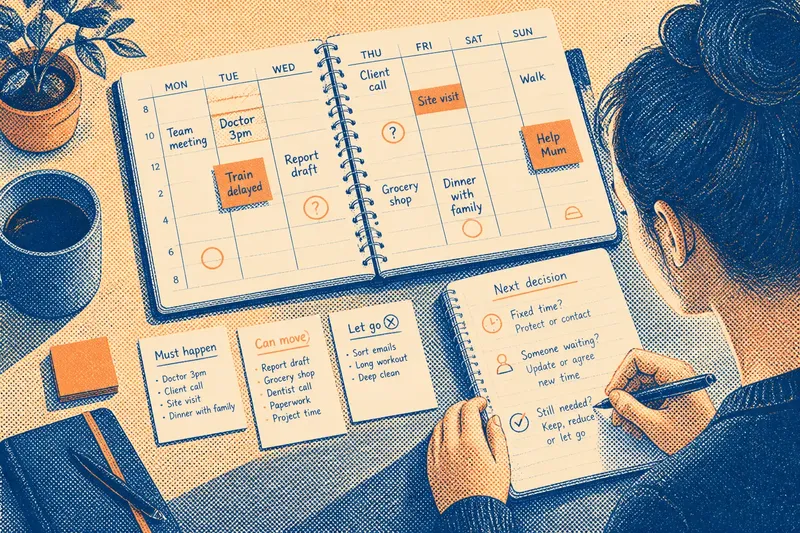
One Main Aim or a Short List for the Month?
Choose a monthly priority that fits the month ahead, then turn it into a clear focus without crowding out the responsibilities you still need to meet.
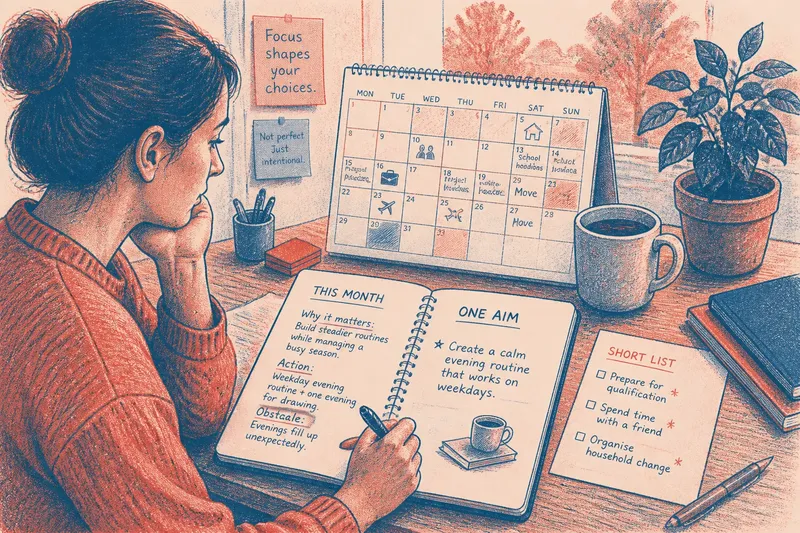
Should you choose one main aim or a short list for the month? A monthly priority works best when it reflects the actual shape of your days, not an ideal version of them. A single aim can sharpen attention; a short list can make room for several commitments that genuinely matter. The choice begins with looking at the month you have, then deciding what deserves your attention within it.
Start with the month as it is
Before writing an aim, scan your calendar. Notice fixed appointments, school holidays, deadlines, travel, caring responsibilities and any stretch of work that will take unusual effort. Also note open space, but do not treat every blank evening as available time. Rest, errands and ordinary life need room too.
Then ask what is likely to change your attention. A month with a move, a family commitment or a demanding project may call for a different kind of priority from a quieter month. You are not predicting every event; you are checking the conditions that will shape your choices.
Say you have a busy month at work and are helping a relative settle into a new home. You also want to resume drawing. If the calendar shows little uninterrupted time, a priority that depends on long, frequent sessions may not fit. A smaller aim, such as keeping one evening for drawing when the week allows, may give the interest a place without pretending the other commitments are absent.
Separate responsibilities from priorities
Some tasks cannot simply be dropped: paying a bill, preparing for a meeting or arranging a necessary appointment. A monthly priority is different. It names an area where you want to direct deliberate attention, such as rebuilding a routine, strengthening a friendship or making progress on a personal project.
Write down the responsibilities already occupying the month, then write down the changes or intentions you would like to make. The first list describes what must be handled; the second contains candidates for your priority. This distinction helps prevent a long task list from masquerading as a meaningful direction.
Keep the notes brief. If one intention keeps returning to mind, mark it. If several are tied to a real deadline or commitment, keep them in view rather than forcing an artificial winner.
Choose one aim when focus matters most
A single monthly aim is useful when progress depends on sustained attention or when the month is already crowded. It gives you a clear answer when a new optional request appears: does this support the aim, or is it another demand on limited attention? That question is a prompt for judgement, not an automatic refusal.
Make the aim concrete enough to guide ordinary decisions. “Feel more settled” may express a wish, but it can be hard to act on. “Make a calm evening routine that works on weekdays” points towards choices you can recognise: preparing tomorrow’s bag, putting your phone away during dinner or leaving one evening unbooked.
Aim for direction rather than a promise to control every week. If the month changes, you can adapt the action while keeping the underlying priority. One focus does not mean ignoring health, relationships or necessary work; it means choosing one area for extra intentional effort.
Use a short list when the month has distinct demands
A small set may suit a month with several separate commitments that cannot sensibly be folded into one aim. For example, a person might need to prepare for a professional qualification, make time for a close friend and organise a household change. Each requires a different kind of attention.
Keep the list genuinely short. For every candidate, write one sentence about why it matters this month and one observable action that would show it received attention. If you cannot name an action, the item may be a broad hope rather than a useful monthly priority.
Next, check whether the items compete for the same time or energy. If they all depend on quiet evenings, they may not form a workable set. You might keep one as the main aim and let the others remain responsibilities or future intentions.
Imagine you have chosen “prepare for the qualification” and “spend time with a friend”. You could reserve a regular study session and arrange one unhurried catch-up, while leaving other optional projects aside. The observable result is not a perfect month; it is that both priorities have a real place in your decisions.
Decide how you will choose between one and several
Use these questions to make the choice before the month begins:
- Is one intention clearly more important now? If yes, give it the main place.
- Does meaningful progress need repeated attention? If yes, favour one aim or make it the anchor of a short list.
- Are several commitments genuinely separate? If yes, a small set may describe the month more honestly.
- Do the priorities compete for the same scarce time? If they do, reduce the list or choose which one leads.
- Can you describe a visible action for each? If not, make the intention clearer before adopting it.
There is no need to make the choice permanent. You are selecting a useful focus for this month, not defining what matters for all time.
What should a monthly priority look like?
Can I have one aim and still handle everything else?
Yes. One aim describes where you are giving extra attention, not the only thing you are allowed to care for. Keep ordinary responsibilities in your calendar and use the aim to guide discretionary choices.
How many priorities should I put on a short list?
Choose only enough to represent the month’s distinct demands without turning the list into an inventory of every wish. If you cannot remember the items without repeatedly checking your notes, shorten the list.
What if my circumstances change midway through the month?
Review the aim against the new situation and adjust the action if needed. You can keep the intention, replace it with a more suitable one or set it aside when a new responsibility must take precedence.
How do I know whether my aim is too vague?
Ask what you would do differently on an ordinary day because of it. If no specific choice comes to mind, add a practical action or narrow the wording.
Turn the choice into a simple monthly note
Write the priority at the top of a page or in a calendar note. Below it, record why it matters now, the action that would make it visible, and the main obstacle you can already anticipate. If you chose several priorities, give each its own action and note where it might compete with another.
Keep the note somewhere you naturally look, such as beside your calendar or in your planner. Check it when deciding whether to accept an optional commitment, not as a demand to judge every day. A quick review midway through the month can reveal whether the focus still fits; change it if the circumstances have changed, rather than adding more aims to compensate.
Choosing one main aim or a short list for the month is ultimately a choice about how to spend attention. Start with the real calendar, make the priority concrete, and leave enough room for life to happen. A useful focus should help you decide what deserves a place in the month, including when the most sensible decision is to revise the plan.