Turn a New Year Resolution into a Written Personal Aim
Turn a New Year resolution into a written personal aim with a clear process for naming what matters, choosing a first action and reviewing your wording.
How do you turn a New Year resolution into a written personal aim you can actually use? Start with the sentence you already have, such as “I want to make more time for drawing”, and make its meaning specific enough to guide a choice. The aim is not to produce perfect wording; it is to give your intention a practical next move.
A resolution often arrives as a broad promise: be more present, spend less time working, or make room for a creative hobby. Writing it down gives you a chance to ask what those words mean in an ordinary week. The result can be a short statement, a first action and a note about what might need to change.
Begin with the resolution you already have
Write the resolution in its original words before trying to improve it. Keeping that first sentence lets you see what you meant at the time, rather than quietly replacing it with a more impressive-sounding ambition.
Then underline the part that matters most. In “I will be more present with my friends”, the important phrase might be “with my friends”; in “I want to make more time for drawing”, it may be “more time”. Ask yourself what you would notice in daily life if that part were receiving attention.
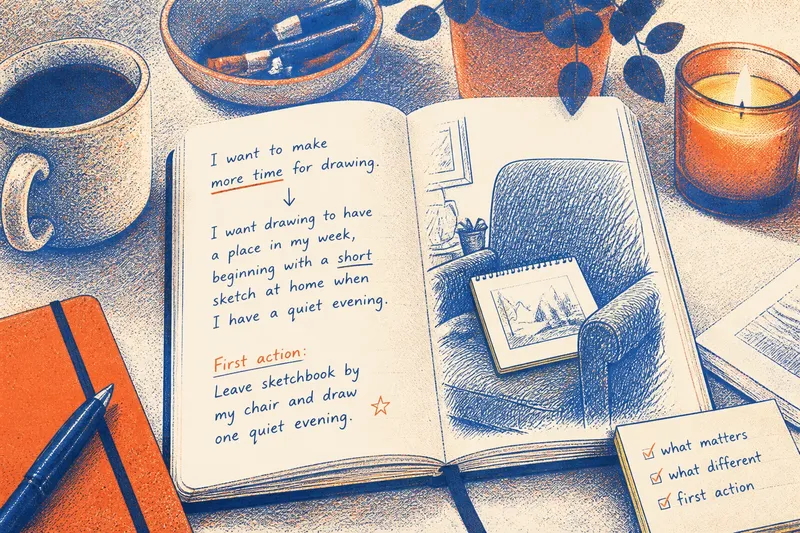
Say you have written, “I want to make more time for drawing.” You note that you miss sketching in your notebook, not that you want to sell finished work. You choose to leave the notebook beside your favourite chair and draw during one quiet evening at home. Your written aim could then read: “I want drawing to have a place in my week, beginning with a short sketch at home when I have a quiet evening.” The first action is clear, while the sentence still describes the purpose rather than a rigid schedule.
Turn broad language into an aim with a visible first move
A useful personal aim connects three things: what you care about, what you want to be different and what you can try next. It need not predict every obstacle or settle the whole plan. A small action makes the intention easier to recognise in practice.
- If the resolution names a quality but no behaviour, such as “be more present”, write down one observable sign, such as listening without checking your phone during a conversation. If that sign feels relevant, use it as a first move; if it feels forced, choose a different behaviour that better fits your intention.
- If the resolution depends on another person’s response, such as “have a closer relationship with my cousin”, identify an action within your control, such as suggesting a call. If making contact feels appropriate, try that; if circumstances make it unwelcome or impractical, choose a respectful way to express care instead.
- If the resolution contains “always” or “never”, look for an ordinary exception you cannot control. If the absolute wording would make one exception feel like failure, replace it with a direction you can return to; if the absolute is genuinely meaningful and workable for you, keep it but state what it means.
- If the aim has no first action, name one small, specific move, such as putting a library book beside your bag. If that action is available to you, include it; if not, choose a step that does not depend on the missing time, equipment or permission.
- If the first action feels too large, identify the part that could be started without a major change, such as opening a sketchbook rather than completing a project. If the smaller move still serves the aim, begin there; if it no longer feels connected, choose a different manageable action.
- If the wording sounds admirable but not personally meaningful, ask what you would miss if you stopped pursuing it. If you can name a genuine reason, add that reason to your note; if you cannot, set the resolution aside or rewrite it in your own terms.
Keep the aim short enough to reread without losing its point. Add a separate note for details such as tools, people involved or practical limits.
Keep the aim distinct from a detailed goal
A personal aim describes what you want to give attention to; a goal usually names a particular result. “Make room for drawing” is an aim. “Finish a landscape for the hallway” is a goal that might support it. The distinction helps when you want a direction without pretending you already know the whole route.
For instance, an aim to spend more time with a sibling could lead to different goals: arrange a walk, cook together, or make a regular call. If one option stops fitting, the aim can remain while you choose another. By contrast, if the goal itself is the part you care about, it may be worth writing it plainly as the central intention.
Write the aim so you can review it honestly
Put the sentence somewhere easy to revisit: a paper diary, a notes app or a card on your desk. Add the date and a brief line explaining why the aim matters. That context can help you later distinguish a change of route from a change of mind.
When you return to it, ask whether the wording still describes what you want, whether the first action remains possible and what you have learnt from trying it. You might keep the sentence, make it more precise or replace it. A revision is useful when it reflects what you now understand, not merely when it sounds tidier.
How do you shape and revisit a personal aim?
Does a personal aim need to begin in January?
No. A New Year resolution is one possible prompt, but an aim can start after a conversation, a change in routine or a quiet moment of noticing. The date does not determine whether the wording is useful.
How is a personal aim different from a goal?
An aim often names a direction or quality you want to make room for, while a goal usually names a specific result. One can support the other: an aim to reconnect with a friend might lead to the goal of arranging a conversation.
What should I do if my resolution is too vague?
Keep the original sentence, then add one observable sign of what it would mean in daily life. If “be more present” matters to you, you might decide that it means listening through a conversation without reaching for your phone.
Can I change a written aim later?
Yes. Note what has changed and whether the original reason still matters, then revise the wording or choose a different first action. The page is a record you can consult, not a verdict on your character.
Let the written aim guide one decision at a time
A written personal aim is most useful when it helps you choose between real options. If you want drawing in your week, an evening spent opening your sketchbook may fit better than buying new supplies; if your intention is more time with friends, sending one thoughtful message may be a better first move than planning an elaborate gathering.
When the next New Year resolution comes around, write down the words you mean, the reason behind them and one action you can take. Keep the note where you can see it, and let your next decision—not a grand promise—show you whether the aim still fits.